When to Trust a Human Review Over Automated Output for Sensitive Business Tasks
Balancing speed and judgment in generative AI workflows
Generative AI tools can produce text, summaries, and even code faster than any team could by hand. For many routine tasks, that speed is a clear win. But when the task involves sensitive information, regulatory risk, or decisions that affect customers directly, the question becomes: should the output go straight into production, or should a human review it first? The answer often depends on the stakes, the context, and the maturity of the AI system you are using.
Professionals who are new to generative AI sometimes assume that because the model sounds confident, its output is reliable. In reality, even the best models can produce plausible-sounding but incorrect information, often called "hallucinations." They can also reflect biases present in their training data, or miss nuances in domain-specific language. That is why a thoughtful approach to responsible AI training matters. It helps teams understand where automation works well and where human oversight is essential.
The case for automated output
Automation shines when the task is well-defined, repetitive, and low-risk. For example, generating draft emails for internal announcements, creating summaries of public documents, or producing first drafts of standard reports. In these cases, the cost of a minor error is low, and the volume of work makes manual review impractical. Automated output can also be useful for brainstorming, where the goal is to generate many ideas quickly, and a human later selects the best ones.
Another scenario where automation works well is when the output is immediately verifiable by a secondary system. For instance, if a model generates code, a test suite can check it automatically. If it produces numbers for a spreadsheet, a formula can validate them. When the verification step is itself automated, the risk of undetected errors drops significantly.
Even in these cases, however, it is wise to set clear boundaries. Define what types of content the model may generate without review, and what types must always pass through a human. This boundary is not static; as the model improves and as the team gains experience, the boundary can shift. But it should always be explicit and documented.
The case for human review
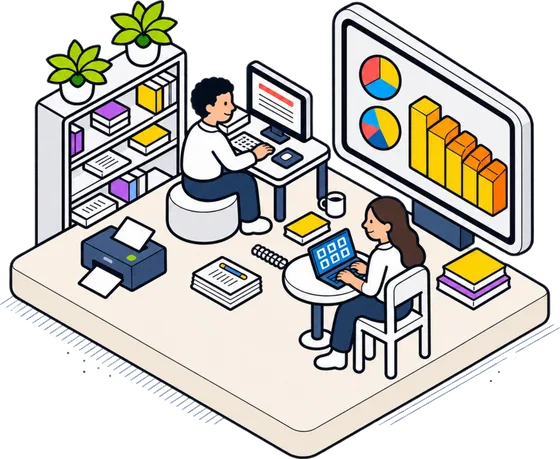
Human review becomes essential when the output has legal, financial, or reputational consequences. A contract clause, a customer-facing email about a billing issue, or a response to a regulatory query are all examples where a mistake could lead to real harm. In these situations, automation can still be useful as a starting point, but the final version must be checked by someone who understands the context and the risks.
Another area where human judgment is irreplaceable is in handling sensitive or ambiguous language. A model may not recognise when a phrase could be interpreted as dismissive or offensive, especially in cross-cultural communication. A human reviewer can catch tone and nuance that a model might miss. Similarly, when the task involves empathy, such as responding to a customer complaint or a patient inquiry, a human touch matters more than speed.
There is also the question of accountability. If an automated system makes a mistake, who is responsible? In regulated industries, the answer is often the organisation that deployed the system. A human review step provides a clear point of control and a record that the output was checked. This is not about distrusting the technology; it is about managing risk responsibly.
Where to draw the line
Deciding between human review and full automation is rarely a binary choice. Many teams adopt a tiered approach. For low-risk tasks, they let the model output flow directly. For medium-risk tasks, they use a human-in-the-loop model where the model generates a suggestion, and a human approves or edits it before it goes live. For high-risk tasks, the human writes the output from scratch, using the model only as a research assistant or a drafting tool.
One practical way to start is to run a pilot. Choose a task that is currently done manually, and let the model produce output for it. Have the same person who used to do it manually now review and correct the model's output. Measure how much time the review saves compared to the original manual process, and track the error rate. Over time, you will develop a sense for which tasks the model handles reliably and which ones still need a human's full attention.
The role of training and awareness
Teams that adopt generative AI often benefit from structured learning that covers not just how to use the tools, but also how to evaluate their output critically. This is where a systematic approach to responsible AI training becomes valuable. It gives professionals a framework for thinking about risk, bias, and accuracy, so they can make informed decisions about when to trust automation and when to override it.

For example, a course that helps professionals build and deploy a simple generative AI application in two days, like the United Ceres College generative AI principles course, can provide hands-on experience with these trade-offs. Participants learn to test model outputs, spot common failure modes, and set up review workflows that match the sensitivity of the task. The goal is not to eliminate human judgment, but to use automation where it adds value and to keep human judgment where it is needed most.
Practical tips for setting up a review process
If you are designing a workflow that includes both automated output and human review, here are a few guidelines that can help:
- Define the risk level of each task before you start. Use categories like low, medium, and high, and decide for each category what level of review is required.
- Give reviewers clear criteria. They should know what to look for: factual accuracy, tone, compliance with regulations, and consistency with brand voice.
- Track the review outcomes. If reviewers are consistently making the same type of correction, that is a signal that the model needs fine-tuning or that the task should stay in the human domain.
- Rotate reviewers to avoid fatigue. Reviewing model output is mentally demanding, and people can become less attentive over time.
- Keep a feedback loop. Share common errors with the team and, if possible, use them to improve the model's prompts or training data.
When automation alone is not enough
There are some tasks where even a well-tuned model should never be the final decision maker. These include situations where the output could affect someone's safety, legal rights, or access to essential services. For example, a model that generates medical advice, loan decisions, or eligibility determinations must be reviewed by a qualified human who can consider factors the model cannot see. The same applies to content that must comply with specific legal or regulatory standards, where the cost of an error is high and the context is nuanced.
In these cases, automation can still play a role as a support tool. It can gather information, draft a first version, or flag potential issues. But the final say should rest with a person who understands the domain and the stakes.
Building a culture of responsible AI use
Ultimately, the choice between human review and automated output is not just a technical decision; it is a cultural one. Teams that adopt generative AI without thinking about oversight risk eroding trust with their customers and regulators. Teams that build review processes into their workflows from the start show that they take quality and responsibility seriously.

A good way to start building that culture is through education. When professionals understand how models work, where they tend to fail, and how to evaluate their output, they become better at using the tools effectively. Programs like the United Ceres College generative AI principles course offer a structured introduction to these ideas, blending practical skills with a focus on responsible use. The course helps participants see automation and human review not as opposites, but as complementary parts of a well-designed workflow.
Striking the right balance
There is no single recipe for when to use automated output and when to require human review. The right balance depends on your industry, your risk tolerance, and the maturity of your AI system. But the principle is straightforward: use automation to handle the volume, and use human judgment to handle the nuance. With a thoughtful approach to responsible AI training, teams can get the best of both worlds, speed where speed is safe, and careful attention where it matters most.
United Ceres College on social media
 Twitter
 LinkedIn
 Facebook
 Instagram
 YouTube
Ends · THEPROMPTWORKSHOP